Explore by topic

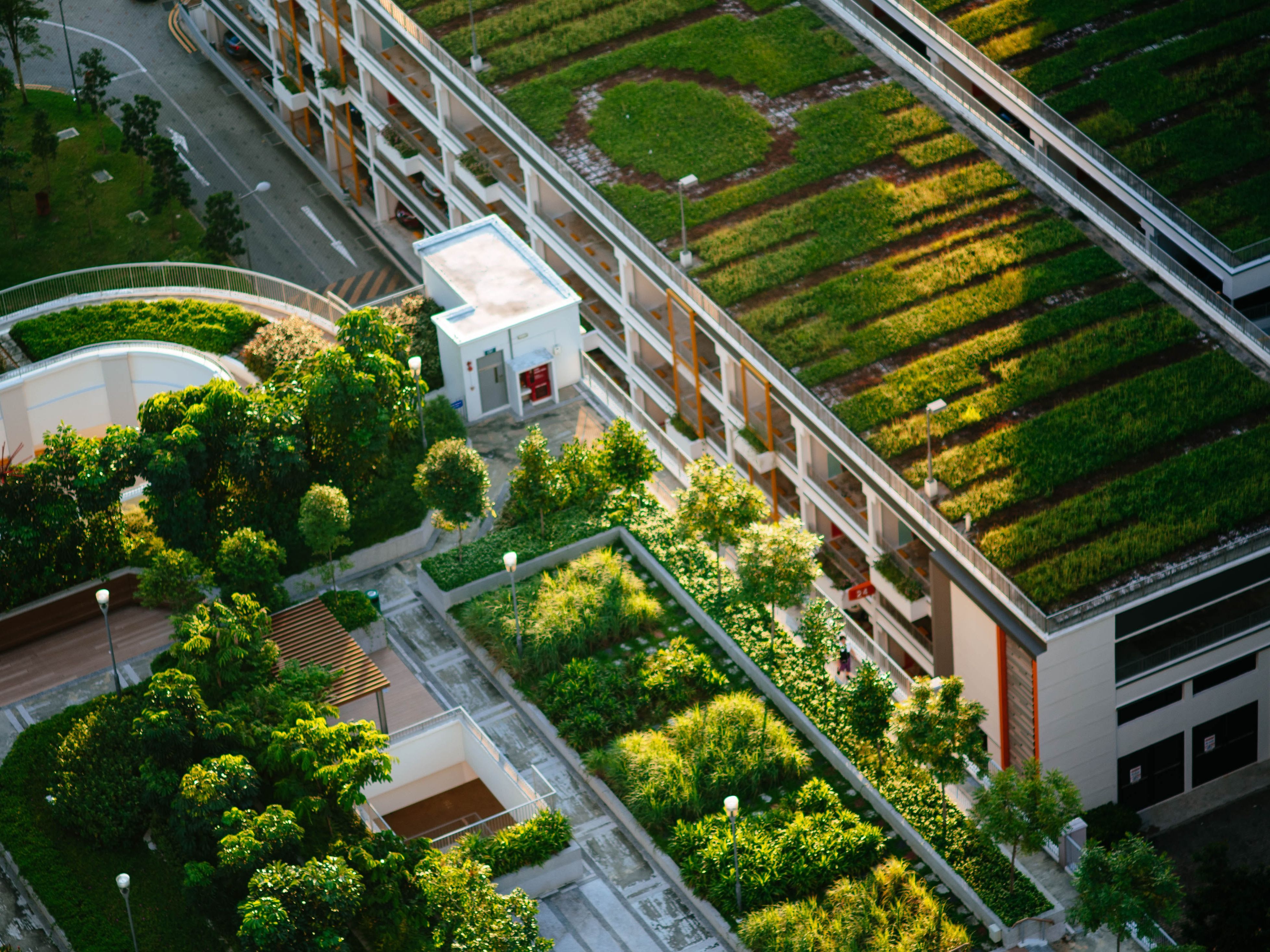
Green roofs in Basel
Last updated: Sep 7, 2023
Summary
Since the 1990's, Basel has succeeded in implementing through financial incentives and regulations a number of green roofs in the city, up to 40% of roof surface in Basel, thus allowing to tackle several urban environmental issues.
Problem
Just like many European cities, Basel experiences high temperatures, urban heat island effect, habitat loss and greenhouse gases emissions.
Solution
Green roofs were found to offer opportunities to combine energy saving, climate change mitigation and adaptation, and biodiversity objectives. In Basel, these programmes were initially driven by energy-saving, and subsequently by biodiversity conservation. By combining financial incentives (i.e., municipal investments in incentive programmes providing subsidies for green roof installation) and building regulations (requiring all new and renovated flat roofs to be greened), the city managed to develop since the mid-1990s the largest area of green roofs per capital in the world. The programmes were funded from the Energy Saving Fund, made up of 5% of all customers’ energy bills in the Basel canton. By including stakeholder participation, the programmes didn’t face resistance and benefitted from high media coverage.
Outcome
Although there is no recent official estimate available, the Basel’s greened flat roof area must be about 40% of roof surface in Basel. This green roof strategy is expected to bring lower temperatures and to create a habitat for plant and wildlife, while reducing surface runoff and purifying the air.
Location
Industries
Involved organisation(s)
Key elements of the circular economy
Attachments and links
Contributors
Owner
Date added: Mar 10, 2022
Last updated: Sep 7, 2023
More from the contributors

Add your content
Strengthen the circular economy knowledge base by adding a report, case study, publication, or other resource to our platform!