Explore by topic

One of the world's largest flow battery storage system, provided by Sumitomo Electric, has come online in the island of Hokkaido in Japan
Last updated: May 30, 2022
Summary
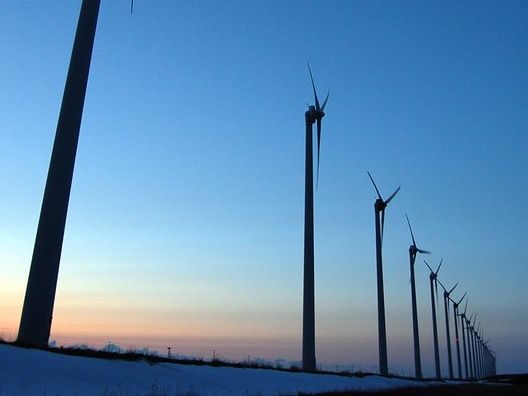
Due to limited interconnection, the island of Hokkaido has had strict rules for renewable energy projects since 2015, requesting that all developments are paired with energy storage. This has spurred development in energy storage projects. Recently, Sumitomo Electric completed the installation of a 17MW/51MWh flow battery storage system, which will support a wind farm. This is one of the largest flow battery storage installations currently in the world.
Problem
The island of Hokkaido in northern Japan is populated by almost 10 million people but has limited interconnection with the rest of the country. Hokkaido Electric Power is the main power utility for the island and a regional operator of the grid. Due to large areas of suitable land, Hokkaido has become a hot spot for clean energy developments but the limited interconnection to the rest of Japan has caused issues as capacity on the grid increased. Hokkaido Electric Power has introduced rules since 2015, where new renewable energy projects must be paired with energy storage.
Solution
The rules set by the regional power utility for renewable energy developments have led to various battery projects on the island, including the first installations in Japan for Tesla’s Megapack BESS solution and a recently-completed solar-plus-storage project supplied by Sungrow. Sumitomo Electric has recently completed a 17MW/51MWh energy storage system based on the vanadium redux flow battery (VRFB) technology. Its size makes it one of the largest VRFB systems installed in the world. The system is installed to help integrate local wind energy onto the grid and has been in operation since 1st April 2022. It is the second VRFB energy storage installation completed by Sumitomo Electric on the island, after a 15MW/60MWh system commissioned in 2015.
Outcome
The new system will support the grid-side and has been installed by Hokkaido Electric at its Minami-Hayarai substation. The capacity of the flow battery system will be shared by 15 companies, who will also share the running costs together with Hokkaido Electric.
This is another project that shows the potential of VRFB systems. Vanadium flow batteries offer a potentially long lifetime energy storage resource, capable of heavy duty cycling over an expected 20+ years in the field. They also offer the ability to scale up energy storage capacity simply by increasing the size of liquid electrolyte tanks, unlike lithium batteries, which need to add more cell stacks and more balance of plant equipment as they add capacity. VRFBs are also considered to be safer than other batteries, due to their operation at room temperature and lack of combustible materials used in their construction.
Industries
Involved organisation(s)
Key elements of the circular economy
Attachments and links
Contributors
Owner
Date added: May 30, 2022
Last updated: May 30, 2022
More from the contributors

Add your content
Strengthen the circular economy knowledge base by adding a report, case study, publication, or other resource to our platform!