Explore by topic

A mini-hub for improved urban logistics
Last updated: Aug 16, 2022
Summary
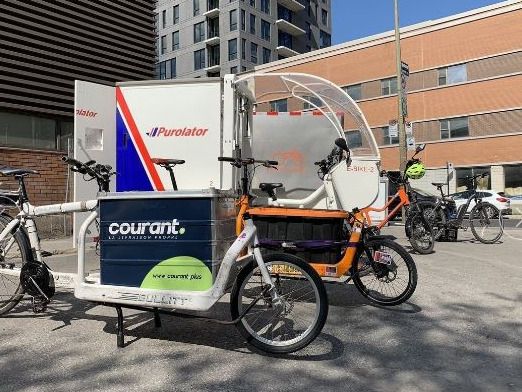
A mini-hub contributes in shaping the transition towards electric and shared mobility, mainly by improving the delivery sector and its environmental footprint.
Problem
Last-mile logistics in urban areas are not efficient enough, representing 30 to 60% of distribution costs and 20 to 30% of greenhouse gas emissions from delivery. For several years, the growth of e-commerce has increased the need for parcel delivery in urban areas, a trend accelerated by the COVID-19 pandemic which has increased the pressure on local businesses, which are little or ill-prepared to face the this requirement.
Solution
Therefore, in many major European and American cities, some urban logistics spaces have been demonstrating their effectiveness in mitigating these externalities and transforming urban logistics.
The project supported by Coop Carbone is deploying a shared urban infrastructure (“mini-hub”) to promote a “softer” model of urban logistics.
Such an initiative is expected to have a more adapted delivery/collection method in an urban context, by improving the vehicles used for delivery services, mainly through electrification, and reducing greenhouse gases emissions. Such a shared urban infrastructure is supporting the access and the competitiveness of local, smaller and medium-sized businesses to sustainable delivery.
Outcome
More broadly, this project is supporting a modal shift towards adapted and low-carbon vehicles, and contributes in reducing several kinds of pollution, such as air and noise pollution. A "mini-hub" can avoid a certain amount of tons of CO2, while ensuring a better cohabitation between the urban population and roads users, and providing them with improved road safety and health conditions.
Location
Industries
Key elements of the circular economy
Attachments and links
Contributors
Owner
Date added: Aug 3, 2022
Last updated: Aug 16, 2022
More from the contributors





Add your content
Strengthen the circular economy knowledge base by adding a report, case study, publication, or other resource to our platform!