Explore by topic

The Tscherning House: a circular renovation of a demolition company’s office building
Last updated: Jan 23, 2025
Summary
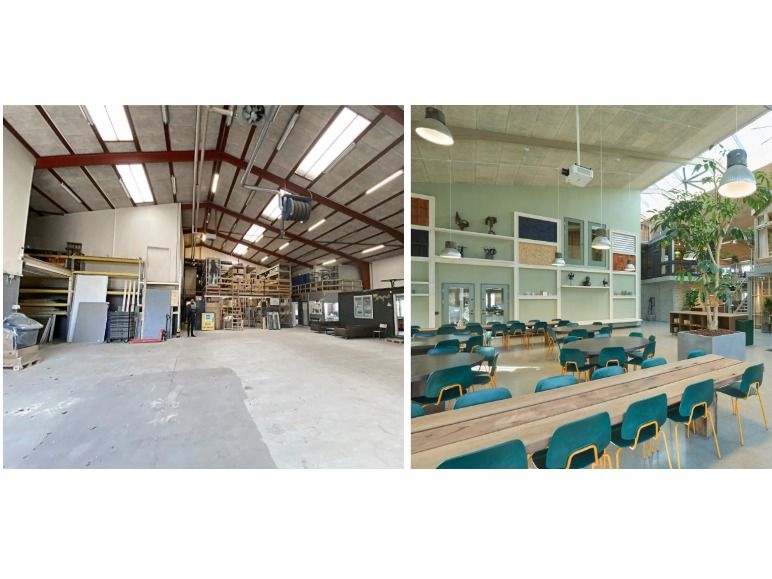
The Tscherninghuset project converted a 1,300 m² demolition company warehouse in Hedehusene, Denmark, into a state-of-the-art headquarters in 2024.
Problem
The project aimed to balance sustainability, functionality, and cost while transforming an unappealing warehouse into an innovative headquarters.
Challenges included:
- Reliance on reused materials, causing supply delays and re-designs.
- Meeting stringent structural, health, and safety standards for reclaimed materials.
- Ensuring the design aligned with circular economy principles, company culture, and employee well-being.
Solution
- Material Reuse and Upcycling: The initiative incorporated reclaimed materials, including steel beams, oak blocks, concrete decks, red wing tiles, and acoustic panels made from waste textiles.
Recycled elements, such as glass doors and wooden frames, complemented reused materials.
- Sustainability Innovations: The work included life-cycle strategies, such as rainwater collection and energy-efficient systems like solar panels, to reduce environmental impact. The building was designed to operate efficiently, minimising reliance on municipal resources.
- Architectural Psychology and Design: The design integrates natural light, greenery, and flexible spaces to promote employee well-being and productivity. A preference matrix aligns spaces with human needs, blending comfort and discovery through diverse reclaimed materials.
Outcome
- A Life-Cycle Assessment (LCA) conducted by environmental engineering firm Sweco revealed that these design and material choices reduced GHG emissions by 58% (318.6 tonnes of CO2eq) and used 89% reclaimed materials (non-virgin) with various strategies.
- The project revealed the necessity and importance of active dialogue and collaboration between the key stakeholders, which are critical to achieving such a high rate of reuse and recycling while dealing with material delays, changes of plan, and coordination of different engineers.
- The building creates a welcoming, productive environment for employees by negotiating between people and its materials. It combines behavioural design techniques with circular design principles to enhance well-being and functionality.
Industries
Involved organisation(s)
Key elements of the circular economy
Attachments and links
Contributors
Owner
Date added: Jan 21, 2025
Last updated: Jan 23, 2025
More from the contributors


Add your content
Strengthen the circular economy knowledge base by adding a report, case study, publication, or other resource to our platform!