Explore by topic

Recycling plastic and cellulose from diapers and absorbent hygiene products
Last updated: Aug 10, 2021
Summary
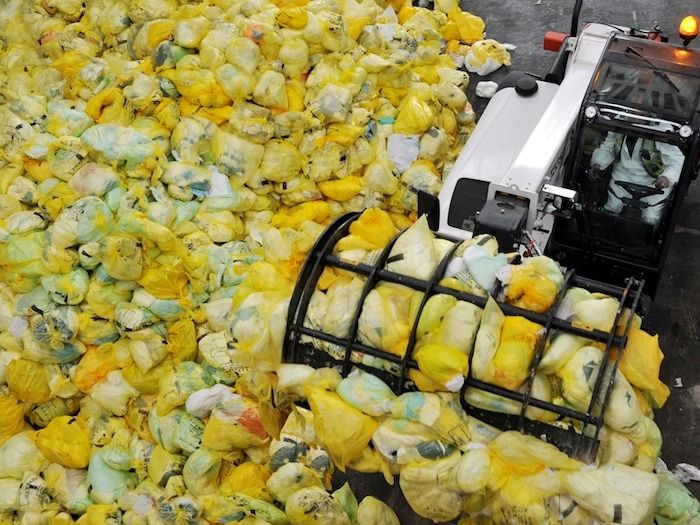
Knowaste has been researching and developing waste treatment technology for processing absorbent hygiene products since the 1990's. Today our engineers have translated this experience into a custom made and practical solution. Within an air controlled and clean working environment, we take delivery of the materials in a dedicated receiving bay. The waste is shredded, separated and using advanced thermal treatment technology, the waste material is sterilised. The plastics continue through granulation and multiple-washing stages before being pelletised to be used, in new products such as plastic components or as an ingredient in composite materials replacing concrete and steel. The fibres are washed, dried and processed for use in pet litter, concrete and tarmac additive, brick manufacture and insulation materials.
Problem
Today, more than 96 per cent of parents use disposable diapers (verses cloth) for convenience. A child in diapers will generate approximately one ton of diaper waste prior to being toilet trained. The Sierra Club estimated that 18 billion disposable diapers are generated annually in the United States, using up four per cent of landfill space (according to U.S. EPA). In addition to diaper waste, the large (and growing) number of aging people using absorbent hygiene products (AHP) of various kinds contributes further to the problem.
Solution
Knowaste Technologies has patented technologies for the recycling of absorbent hygiene products, including disposable baby diapers, incontinence products and disposable bed liners, into sanitized reusable paper pulp and plastic components.
Outcome
26kg of CO2e are saved for every 1 ton of AHP waste processed with Knowaste technology.
For a typical 36,000 tons per annum plant, that is equivalent to:
* taking 7500 cars off the roads
* the total CO2 emissions of 2000 citizens
* and saving over 32 Olympic sized pools or 80,000 cubic meters of waste heading to disposal each year
Learn more about this case
Learn moreLocation
Industries
Involved organisation(s)
Attachments and links
Contributors
Owner
Date added: Oct 1, 2020
Last updated: Aug 10, 2021
More from the contributors

Add your content
Strengthen the circular economy knowledge base by adding a report, case study, publication, or other resource to our platform!