Explore by topic

Interconnected wardrobe that sells your clothes if you don't wear them
Last updated: Apr 11, 2023
Summary
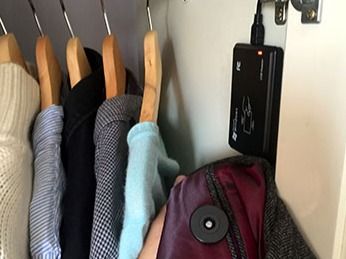
Academics at Birmingham City University are developing a 'connected wardrobe' in which forgotten items will text owners to remind them that they are gathering dust. The researchers say they want to create an 'Internet of Clothes' that sees garments tagged using washable contactless technology, known as radio-frequency identification (RFID). If ignored for long time, the clothes will automatically contact charity shops asking to be recycled or offer themselves for auction on eBay. The connected wardrobe is a practical, engaging concept to encourage people to think about their clothing consumption.
Problem
Whilst many of us love our fashion, we have a problem. Developed countries are over-consuming clothing. Back in the 1930s, for example a typical American owned 9 outfits. Today, that number is 64. It’s not just the US, globally we buy four times the number of clothes that we did in the 1990s. Yet it is estimated that we wear just 20% of our wardrobe items regularly. It creates an impact on both the environment and exploitation of garment workers
Solution
In The Internet of Clothes, the items are connected via an RFID tagging system. The user will scan each tag, photograph and name the items, then categorise their type of usage according to the weather or occasion. Each day, at a time set by the user, the garments will review their usage, and based on the weather forecast, they will send friendly messages to their owner. If a garment is neglected, it will automatically contact a charity who will send a recycling envelope with a request to return the garment.
Outcome
This initiative is from 2016. There have not been updates since then
Learn more about this case
Learn moreLocation
Industries
Attachments and links
Contributors
Owner
Contributor
Date added: Oct 1, 2020
Last updated: Apr 11, 2023
More from the contributors







Add your content
Strengthen the circular economy knowledge base by adding a report, case study, publication, or other resource to our platform!