Explore by topic

Promoting Sustainable Practices and Worker Protection in Bangladesh’s Jhut Sector: Policy Pathways for a Circular Textile Economy
Last updated: Jun 23, 2026
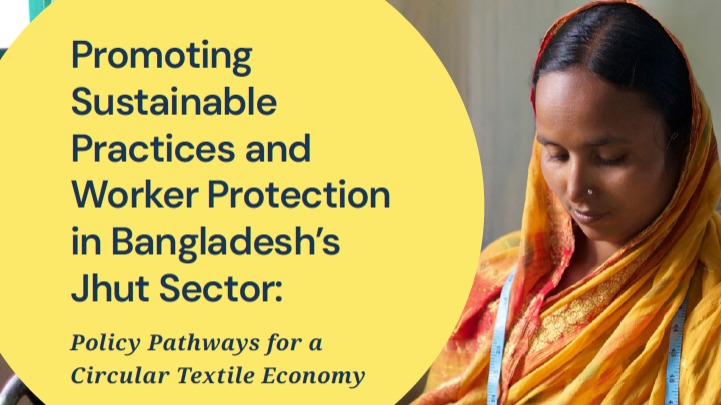
Photo from Circle Economy
Summary
This policy brief aims to help both Bangladesh’s national policymakers and international development
partners to better understand the country's post-industrial textile waste-processing sector (Jhut) and to design inclusive circular transition policies.
This policy brief aims to help both Bangladesh’s national policymakers and international development
partners to better understand:
(a) how the Jhut sector works,
(b) the size and variety of the workforce in 12 clusters across 10 districts, and
(c) what steps are needed to ensure that new policies for increasing circularity at an industrial scale do not increase costs and risks for workers and small enterprises in the informal economy.
It challenges the idea that workers in the informal economy should be treated as a problem or that formalisation is a straightforward process or welcomed by all actors. Instead, it presents the sector through a ‘do no harm’ approach, emphasising recognition, protection, representation, and gradual improvement.
Attachments and links
Contributors
Owner
Date added: Jun 18, 2026
Last updated: Jun 23, 2026

Add your content
Strengthen the circular economy knowledge base by adding a report, case study, publication, or other resource to our platform!