Explore by topic

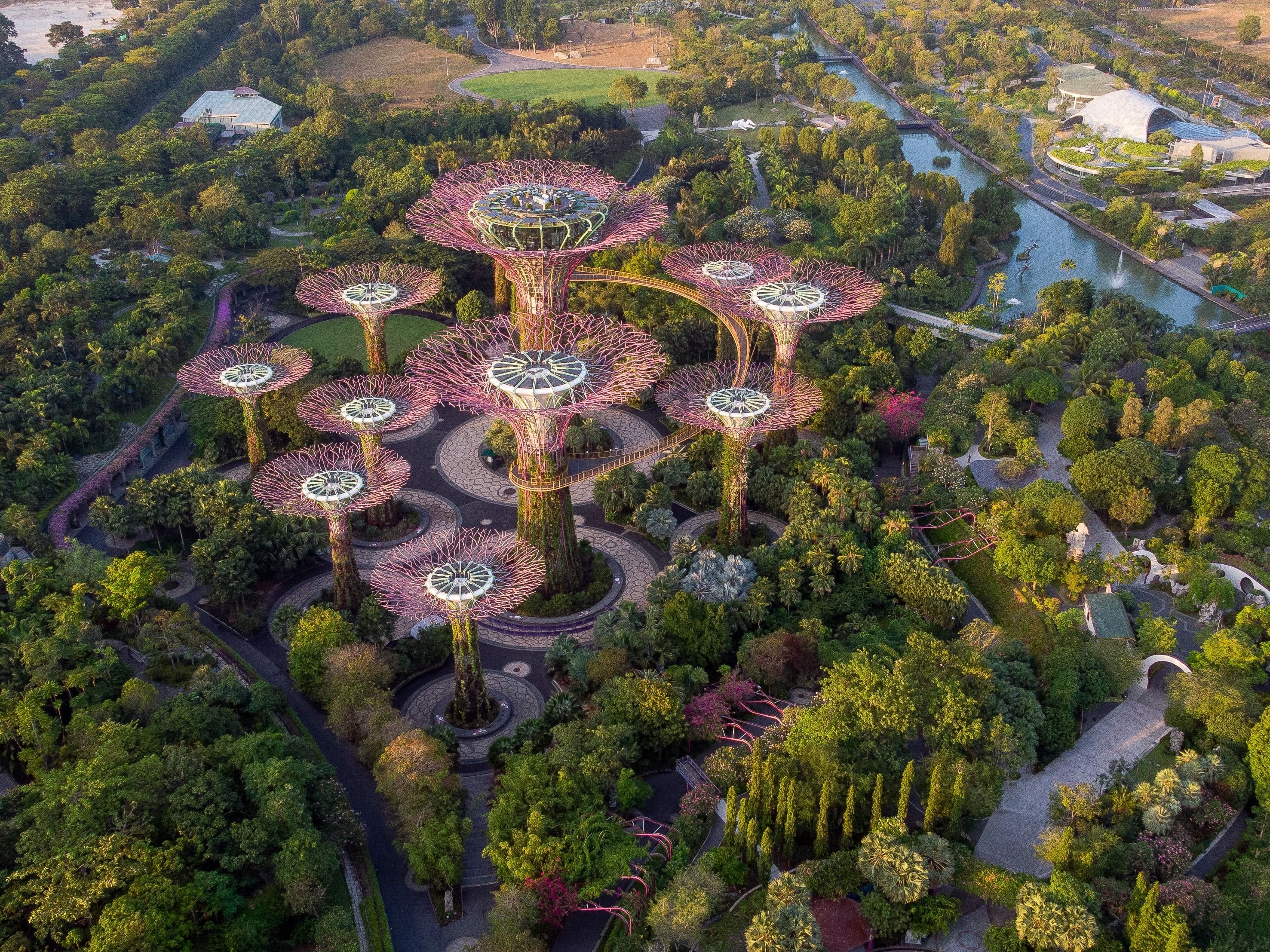
Singapore, the "Garden City"
Last updated: May 23, 2022
Summary
For about five decades since the onset of rapid urbanization and industrialization, Singapore has placed significant emphasis on urban greening (including rooftop and vertical greenery, gardens, and park corridors) and conservation of the island's rich biodiversity as key components of its development approach, setting the foundation for its development as a “Garden City”.
Problem
Space is one of the main challenge of greening a small city-state like Singapore with a land area of only 700 square kilometres and a population of 4.6 million (and still growing). Moreover, green infrastructures could be used for urban food production, in a country where 90 percent of food comes from abroad.
Solution
Through effective urban planning strategies which include the addition of parks and water bodies, skyrise greenery, and introduction of other resource-efficient gardens for food production (including vertical farming and hydroponics), the City has increase its green cover, while supporting Singapore's target to produce 30 percent of its own food by 2030.
Outcome
Between 1986 and 2007, the green cover in Singapore grew from 35.7 percent to 46.5 percent, while incentives to high-tech companies developing resource-efficient farming allow to support Singapore's food security target.
Location
Industries
Involved organisation(s)
Key elements of the circular economy
Attachments and links
Contributors
Owner
Contributor
Contributor
Date added: Aug 19, 2021
Last updated: May 23, 2022
More from the contributors








Add your content
Strengthen the circular economy knowledge base by adding a report, case study, publication, or other resource to our platform!