Explore by topic

Advanced dismantling systems for circular material recovery
Last updated: Jun 9, 2026
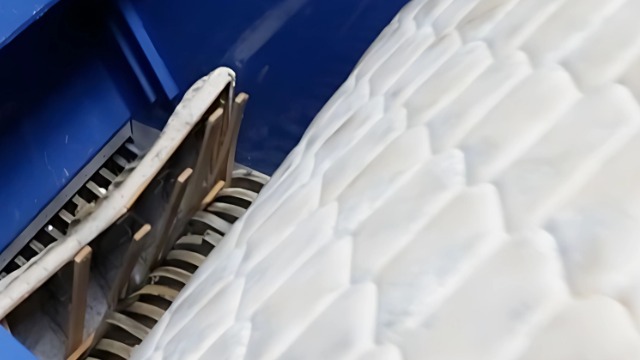
Photo from Revira Technologies
Summary
REVIRA Technologies is a Portuguese circular technology company developing intelligent dismantling and material detection systems for complex waste streams such as mattresses, foam products, and automotive components. The company enables the recovery of high-quality, traceable secondary raw materials by combining automated dismantling with advanced material identification and digital traceability systems.
Problem
Mattresses, foam products, and composite materials used in automotive and furniture applications represent some of the most challenging waste streams in Europe. These products are complex to dismantle, often combining multiple bonded materials that are difficult to separate using conventional recycling methods. As a result, large volumes of these products are sent to landfill or incineration, contributing to greenhouse gas emissions, waste, and unnecessary environmental impacts. At the same time, recyclers face increasing pressure to recover materials efficiently while meeting stricter regulatory requirements for traceability, reporting, and material recovery.
Another key challenge is the shortage of high-quality secondary raw materials that can replace virgin inputs in industrial supply chains. Without scalable systems for identification, separation, and traceability, valuable materials embedded in post-consumer products remain underutilised.
Solution
REVIRA addresses these challenges through a combination of intelligent dismantling systems, advanced material detection technologies, and digital traceability infrastructure. The company’s solutions enable precise separation of materials from complex products such as mattresses and foam-based components, improving recovery rates and material quality. Its cloud-based platform supports full lifecycle tracking of recovered materials, ensuring transparency and compliance with regulatory frameworks such as EPR schemes and Digital Product Passport requirements. This enables stakeholders across the value chain to verify material origins and recovery pathways.
By integrating automation, sensing technologies, and digital data systems, REVIRA facilitates efficient dismantling processes while ensuring that recovered materials meet quality standards for reuse in new products. The system is designed to be scalable across multiple waste streams and industries, including textiles, furniture, and automotive interiors.
Outcome
REVIRA demonstrates how advanced dismantling technologies and digital traceability can enable circular value chains for complex, multi-material products. By increasing recovery rates and improving material quality, the solution contributes to reducing landfill dependency and associated emissions. The impact potential is significant: in Portugal alone, REVIRA’s approach could help avoid more than 450,000 tonnes of waste annually and reduce approximately 71,000 tonnes of CO2e per year, by diverting mattress waste from disposal and enabling higher-value material recovery.
Beyond environmental benefits, the approach supports the creation of new circular value chains by enabling a consistent supply of high-quality secondary raw materials. This can stimulate economic activity in recycling, remanufacturing, and circular product design while improving resource efficiency across sectors. Overall, REVIRA represents a scalable model for transforming complex post-consumer waste into traceable, high-value inputs for industry. By combining automation, material intelligence, and digital infrastructure, the initiative supports the transition toward a more circular and resource-efficient economy across Europe.
Looking ahead
As REVIRA continues to develop the infrastructure needed for circular material recovery, support from CircularInvest has helped the company navigate the complex partnerships, technologies and business considerations required to scale its solutions.
‘We are building a circular infrastructure, and it is not only about funding but is very much about getting the right connections and orchestrating a lot of partners and especially putting many puzzle pieces together. It means you need to understand the IP situation, and this was a very good thing from CircularInvest to understand the IP credibility and predictability’.
-Mateusz Wielopolski, REVIRA Technologies
Location
Industries
Involved organisation(s)
Key elements of the circular economy
Attachments and links
Contributors
Owner
Date added: Jun 9, 2026
Last updated: Jun 9, 2026
More from Circle Economy

Add your content
Strengthen the circular economy knowledge base by adding a report, case study, publication, or other resource to our platform!