Explore by topic

Reducing food waste through B2B surplus trading platforms
Last updated: Jun 9, 2026
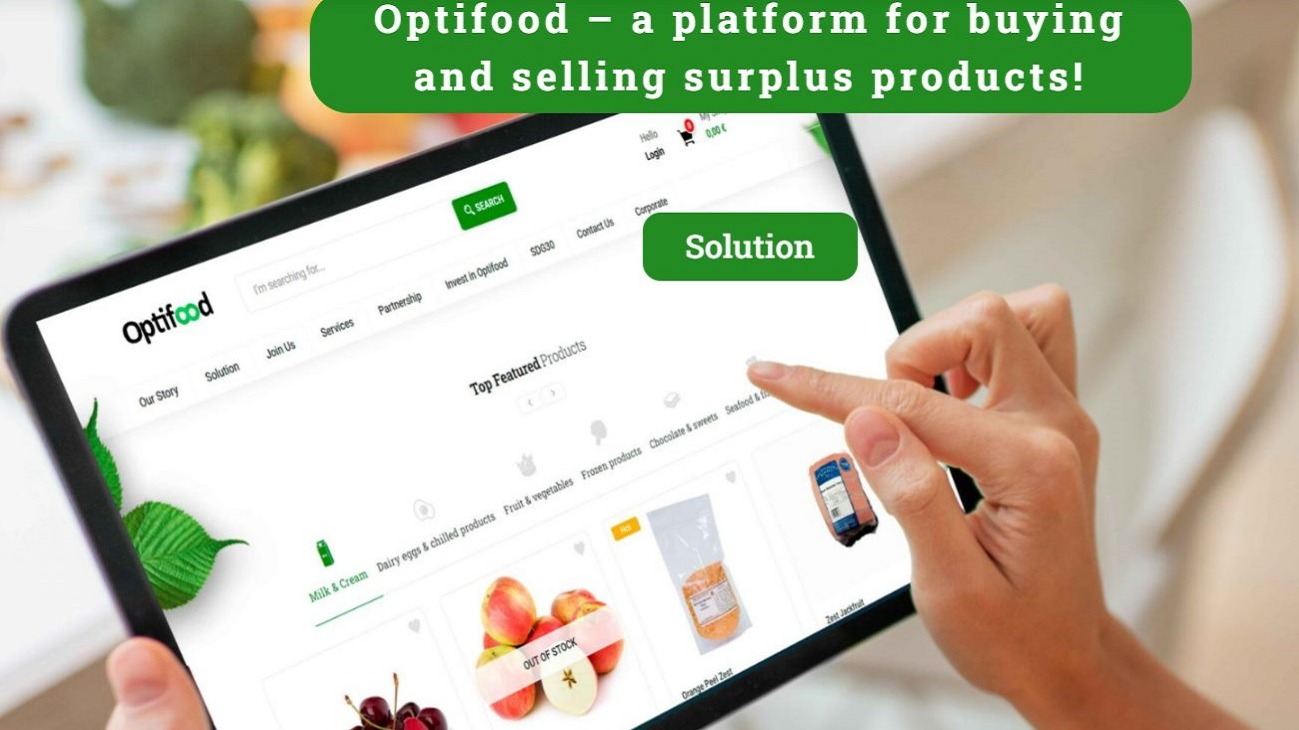
Photo from Optifood
Summary
Optifood is a Slovenian B2B digital marketplace designed to reduce food waste by enabling the efficient trading and redistribution of surplus food. The platform connects producers, retailers, and other food system actors, using data analytics and AI to match supply with demand in real time. By creating structured secondary markets for surplus food, Optifood helps businesses recover value from excess inventory while reducing environmental impacts associated with food waste.
Problem
Food systems generate significant volumes of surplus food at multiple points across the supply chain, including production, distribution, and retail. Much of this surplus is still edible but is often discarded due to logistical constraints, demand uncertainty, or lack of efficient redistribution channels. This results in substantial environmental impacts, including greenhouse gas emissions (particularly methane from food decomposition) as well as unnecessary use of land, water, and energy embedded in food production. In addition, businesses incur financial losses from unsold inventory and waste management costs. A key challenge is the lack of coordinated infrastructure to efficiently redistribute surplus food at scale. Fragmented supply chains, limited transparency, and mismatches in timing between supply and demand often prevent edible food from being redirected to higher-value uses.
Solution
Optifood addresses these challenges through a digital B2B marketplace that enables real-time trading of surplus food. By connecting producers, retailers, and other stakeholders, the platform facilitates efficient redistribution of excess inventory before it becomes waste. The system leverages data analytics and artificial intelligence to match available surplus food with potential buyers or secondary users, improving speed and efficiency in the redistribution process. This helps ensure that edible food is redirected into human consumption pathways wherever possible. In addition to reducing waste, the platform helps businesses optimise inventory management and recover economic value from surplus products. This creates incentives for more efficient production and distribution practices across the food supply chain.
Outcome
Optifood demonstrates how digital marketplaces can significantly reduce food waste by enabling more efficient redistribution of surplus goods. The platform prevents an estimated 500,000 kilograms of food waste per year, directly reducing the environmental impacts associated with food decomposition, particularly methane emissions from landfill. By redirecting edible surplus into secondary markets, the solution also reduces unnecessary production demand and helps avoid the embedded environmental footprint of food, including land, water, and energy use. In addition, it contributes to lowering waste from associated packaging materials, including plastics.
The platform generates economic benefits by reducing disposal costs for businesses and creating new revenue streams from unsold inventory. This improves overall supply chain efficiency and incentivises better forecasting and inventory management practices. Overall, Optifood represents an example of how data-driven platforms can enable circular food systems at scale by aligning supply and demand more effectively, reducing waste volumes, and improving both the environmental and economic performance of food value chains.
Location
Industries
Involved organisation(s)
Key elements of the circular economy
Attachments and links
Contributors
Owner
Date added: Jun 9, 2026
Last updated: Jun 9, 2026
More from Circle Economy


Add your content
Strengthen the circular economy knowledge base by adding a report, case study, publication, or other resource to our platform!