Explore by topic

Extracting clean water and minerals from salty wastewater by freezing it - EUTECTIC FREEZE CRYSTALLIZATION (EFC): A COOL SOLUTION FOR PROCESSING GEOTHERMAL WASTE BRINES?
Last updated: Feb 15, 2021
Summary
In this study the potential of freezing methods for the treatment of geothermal waste brine in the Netherlands was investigated. Based on the first analysis, modelling and experiments in this study, the use of freezing methods for the treatment of geothermal waste brines seems promising. Freeze concentration can result in significant reduction of the waste stream and the potential to produce usable water while using eutectic salt precipitation may produce significant yields of hydrohalite with economic value. The production of products (ice, salt) of high enough purite to allow re-use requires further study on actual geothermal brines with more complex brine composition than considered in this study. However, freeze concentration is already a commercially available method for brine treatment, and should be considered as an option for the concentration of geothermal waste brines.
Problem
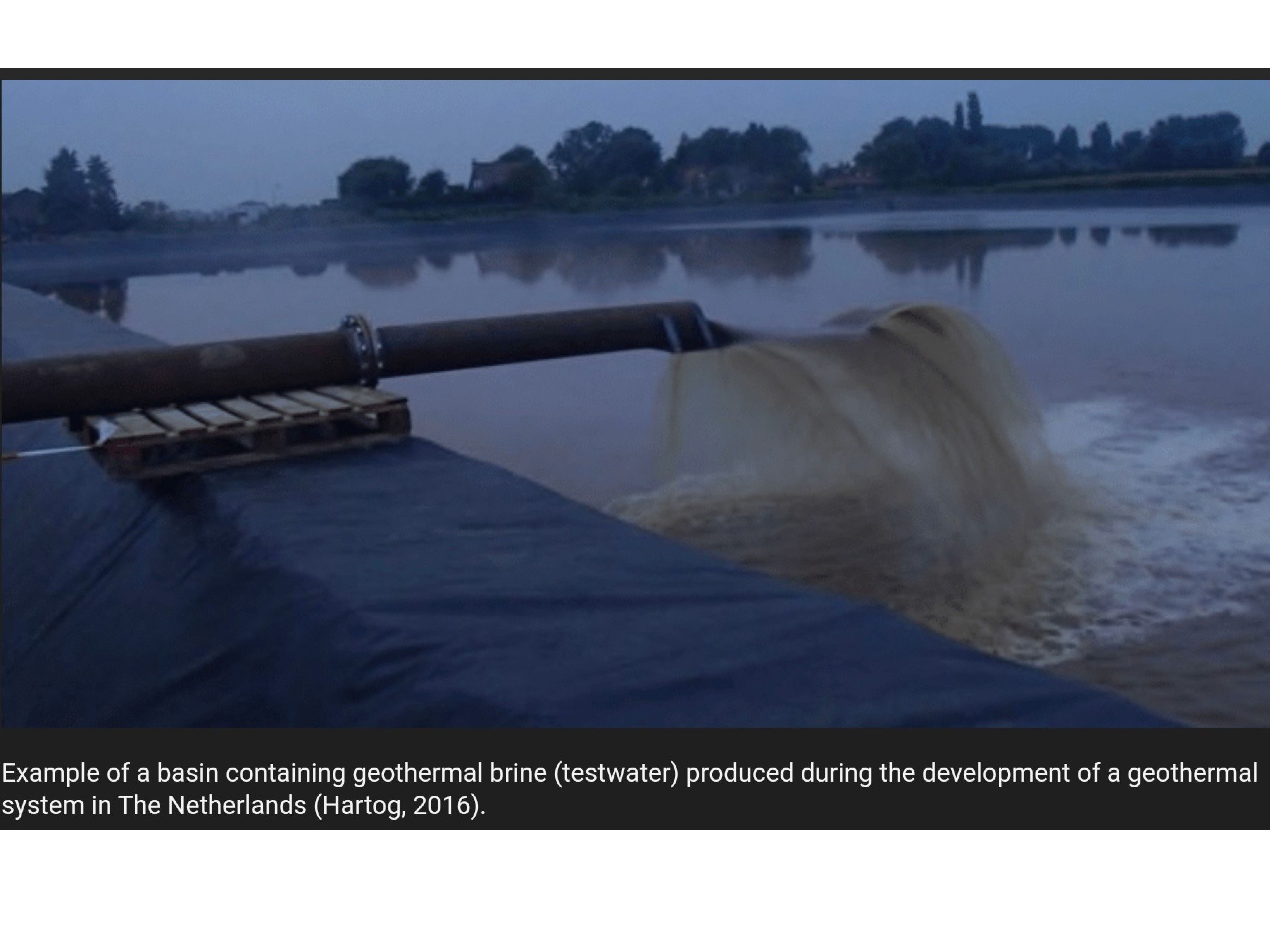
To minimize fossil fuel combustion, geothermal heat production is increasingly applied in the horticultural sector and for domestic heating in The Netherlands. One of the major operational challenges for further development of geothermal energy in The Netherlands is dealing with the large volumes (3500-6000 m3 per well) of geothermal brine, also called testwater, that are produced during well development (Bakema et al. 2016; Hartog 2016). Since re-injection of the waste brine has so far been associated with significant risks for clogging and/or damaging the newly developed wells, finding environmentally and financially acceptable options has been challenging.
Solution
An approach that has not been considered thus far for the treatment of geothermal waste brine is the use of freezing methods, such as freezing concentration or the the relatively new eutectic freeze crystallization (EFC). These methods rely on freezing rather than evaporation to concentrate the brine. Since the freezing of water requires six times less energy than evaporation (Lewis et al. 2010), freeze concentration could provide an energy-efficient alternative. In addition, during EFC ice and subsequently salt(s) are formed separately
Outcome
The results of this study clearly indicate that sodium and chloride are the main constituents to consider in the evaluation of EFC potential on geothermal brines in the Netherlands with hydrohalite as the most important potential salt yield. However, further research should focus on ways to increase the purity of the produced ice further, e.g. through the use of ice seeding. Also, the complexity of geothermal brine chemistry should be considered in more detail.
Location
Industries
Involved organisation(s)
Key elements of the circular economy
Attachments and links
Contributors
Owner
Date added: Feb 15, 2021
Last updated: Feb 15, 2021
More from the contributors
Add your content
Strengthen the circular economy knowledge base by adding a report, case study, publication, or other resource to our platform!